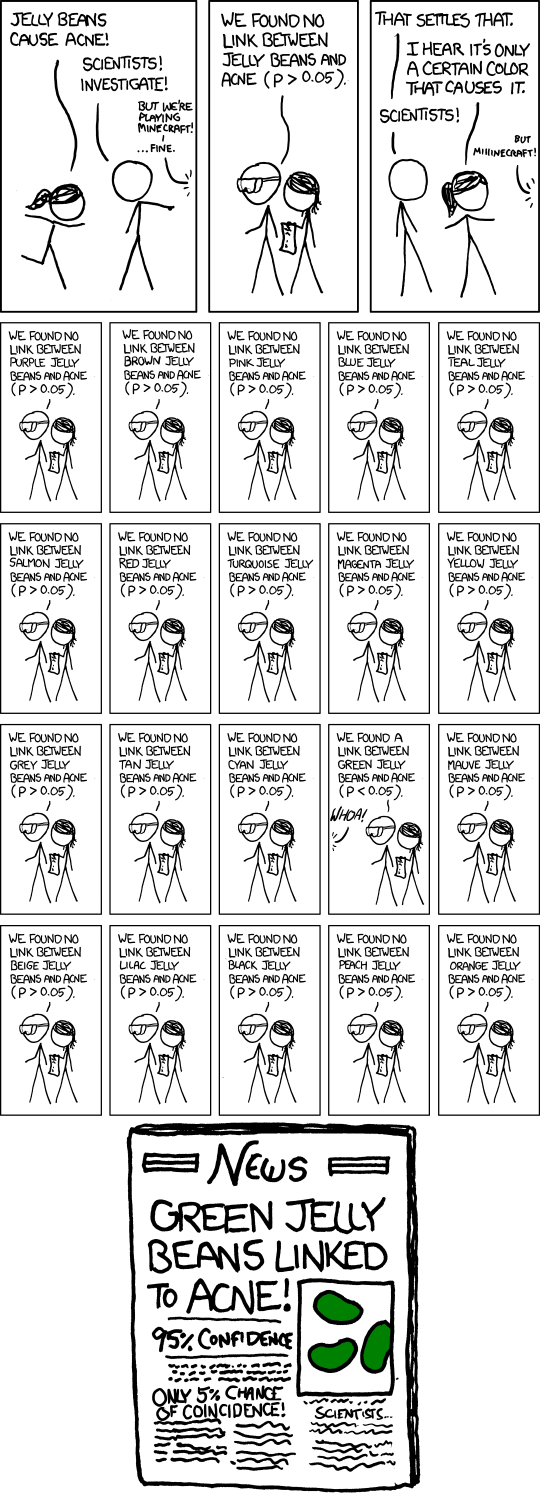
I had to calculate Cohen's d, Eta Squared and r today, but thought that would be too dreary a topic for a Friday blog post.
Instead, I found some statistics quotes here
Some of my favourites:
Torture numbers, and they'll confess to anything. ~Gregg Easterbrook
He uses statistics as a drunken man uses lampposts - for support rather than for illumination. ~Andrew Lang
Statistics can be made to prove anything - even the truth. ~Author Unknown
Friday, May 20, 2011


Tuesday, May 17, 2011
Evaluation of iPad for Education
Reed College, in Portland Oregon, reports on their evaluation of the use of the iPad in class here. Reports on the use by students and faculty are available.
Whereas a previous evaluation was very critical of the usefulness of the Kindle DX in the class context, this report seems to support the adoption of tablets in the classroom.
The report particularly commented positively on the legibility of material on the iPad, the usability of the touch screen and the size and weight of the tablet. It was also found to be particularly useful if students wanted to switch between texts in class, and the search ability and navigation within texts was also positively evaluated.
They commented that PDF transferability was somewhat difficult, the filing system was not optimally user friendly and that the on-screen keyboard of the iPad did not efficiently support more than short comment typing. Some other concerns related to cost factors and accessibility
Monday, May 16, 2011
Better Evaluation Virtual Writeshop
Irene Guijt posted this on the Pelican List serv today
Perhaps you have undertaken an evaluation on a program to mitigate climate change effects on rural people living in poverty, or one on capacity development in value chains. Or worked on participatory ways to make sense of evaluation data, or developed simple ways to integrate numbers and stories. We’d like to bring unknown experiences to the global stage for wider use.
Do you have an experience that covers many different aspects of evaluation – design, collection, sensemaking, and reporting? Did you look at different options to develop a context-sensitive approach? And has your evaluation process not yet been shared widely? If your answer is yes to these questions, then our virtual writeshop on evaluation may be of interest.
We will facilitate a virtual writeshop between May and September 2011 that will lead to around 10 focused documents to be shared globally. Participating in the writeshop will give you structured editorial support and peer review to develop a publication for the BetterEvaluation site.
For more information, including how to submit a proposal, go here.
Saturday, May 14, 2011
Wednesday, May 11, 2011
22 Approaches for Raising Student Achievement
I’m working my way through a book by Stuart S. Yeh Entitled “The Cost-Effectiveness of 22 Approaches for Raising Student Achievement” (Also available as an ebook http://ow.ly/4R62s or on paper from www.loot.co.za see: http://ow.ly/4RRll)

The book (based on Studies in the States) concludes that:
I find this interesting, because this makes a very compelling argument for using computer based learning in schools. The first chapter of the book presents a nice theoretical overview that indicates how kids become disheartened if they don’t consistently have mastery experiences. If assessment and teaching can be individualized so that each learner progressively improves compared to their previous performance (rather than a comparison with peers) they are likely to feel that they are in control of their learning, and they would be more likely to stay engaged in the learning process. The chapter states:
Software can automate the provision of corrective feedback, and assigning of content (on a daily basis) and this has been shown to have powerful effects on learning and achievement. Yeh reports that in a study of Math Assessment, (involving 1,880 students in grades 2 through 8, 80 classrooms and seven states) they found an effect size of 0.324 Standard deviations over a 7 month period. This is a huge increase in learner performance.
Of course we need to remember that this is based on the American school system that is very different from ours. And note the study is about "Cost Effectiveness". It is not saying that the other strategies are not effective - In their context the other strategies were effective but at a higher cost than Rapid Assessment
Of course there are a few other assumptions that will have to be checked if a similar intervention is implemented in South Africa:
1) Computer infrastructure, technical support, and teacher’s abilities must be supportive of successful implementation. It is a lot harder to implement an ICT based project than one might imagine at the outset.
2) Rapid assessment cannot replace the role of the teacher – It can help learners improve, but they still have to get quality tuition from a qualified teacher.
3) Learners’ ability to interact with the software must not be blocked by poor reading / language capabilities.
The book (based on Studies in the States) concludes that:
The review of cost-effectiveness studies suggests that rapid assessment is more cost effective with regard to student achievement than comprehensive school reform (CSR), cross-age tutoring, computer-assisted instruction, a longer school day, increases in teacher education, teacher experience or teacher salaries, summer school, more rigorous math classes, value-added teacher assessment, class size reduction, a 10% increase in per pupil expenditure, full-day kindergarten, Head Start (preschool), high-standards exit exams, National Board for Professional Teaching Standards (NBPTS) certification, higher teacher licensure test scores, high-quality preschool, an additional school year, voucher programs, or charter schools.
I find this interesting, because this makes a very compelling argument for using computer based learning in schools. The first chapter of the book presents a nice theoretical overview that indicates how kids become disheartened if they don’t consistently have mastery experiences. If assessment and teaching can be individualized so that each learner progressively improves compared to their previous performance (rather than a comparison with peers) they are likely to feel that they are in control of their learning, and they would be more likely to stay engaged in the learning process. The chapter states:
A theory of learning may be deduced: Individualization of assessment, task difficulty and performance expectations for each student on a daily basis, in combination with performance feedback, autonomy in task execution and an accelerating standard of performance, ensures that students achieve success and feel successful on a daily basis, fostering student engagement, increased effort, and further improvements in achievement in a virtuous cycle.
Software can automate the provision of corrective feedback, and assigning of content (on a daily basis) and this has been shown to have powerful effects on learning and achievement. Yeh reports that in a study of Math Assessment, (involving 1,880 students in grades 2 through 8, 80 classrooms and seven states) they found an effect size of 0.324 Standard deviations over a 7 month period. This is a huge increase in learner performance.
Of course we need to remember that this is based on the American school system that is very different from ours. And note the study is about "Cost Effectiveness". It is not saying that the other strategies are not effective - In their context the other strategies were effective but at a higher cost than Rapid Assessment
Of course there are a few other assumptions that will have to be checked if a similar intervention is implemented in South Africa:
1) Computer infrastructure, technical support, and teacher’s abilities must be supportive of successful implementation. It is a lot harder to implement an ICT based project than one might imagine at the outset.
2) Rapid assessment cannot replace the role of the teacher – It can help learners improve, but they still have to get quality tuition from a qualified teacher.
3) Learners’ ability to interact with the software must not be blocked by poor reading / language capabilities.
Subscribe to:
Posts (Atom)