Accountability theatre, municipal service delivery, and the difficulties of working together.
Our municipal ward's WhatsApp group has become quite a spectacle lately. What used to be a fairly orderly stream of municipal service-delivery updates has turned into a constant exchange of complaints, demands for answers, threats of escalation, and the occasional public humiliation of municipal officials.
I've been wondering about the dynamics behind this.
A system under pressure
There certainly seems to be an increase in electricity and water supply problems. Cable theft, vandalism, ageing infrastructure, maintenance backlogs, storm damage, and increasing demand for water during hot weather. None of these are particularly easy problems to solve, and I suspect the municipal teams responsible for responding are under considerable pressure.
Then add municipal elections. Residents are understandably frustrated, and councillors have every incentive to demonstrate that they're doing something about it.
And there is only so much that can be achieved by demanding answers more forcefully. The official probably doesn't have a repair team sitting around waiting for someone to ask. If the underlying problem is a shortage of resources, damaged infrastructure or a backlog of repairs, another escalation doesn't make those constraints disappear.
Accountability theatre
Which brings me to what I've started thinking of as accountability theatre.
A councillor demands an update. The municipal official responds with "noted". The councillor demands a proper answer, perhaps with a few insults thrown in, and threatens to escalate the matter to increasingly senior people. Residents get to see their councillor fighting for them.
There's a performance, an audience, a villain, and someone playing the hero.
But I wonder what this actually achieves.
And then, about half an hour later, a detailed update from the municipal team appears. Eight outages resolved, sixteen still outstanding, teams overstretched. The councillor thanks them for finally providing a proper response.
To anyone following the exchange, it rather looks as though the public dressing-down worked.
Except that the municipality provides scheduled updates, with the next one due at 9 pm.
So was this an example of effective political pressure? A fortunate coincidence? Or a rather clever way of claiming credit for something that was going to happen anyway?
I have no idea. But I suspect the audience has already drawn its conclusions.
I'm not suggesting that officials shouldn't be held accountable. Of course they should. Residents need information, and poor communication deserves attention. But there is a difference between accountability that helps us understand and address a problem, and accountability that is mostly about being seen to demand answers.
When the audience joins the performance
What concerns me is how easily these exchanges become personal. People feel attacked, respond defensively, and before long we're arguing about who said what, rather than what needs to happen.
The stream of vitriol is unpleasant, but I still want to know what's happening with the service interruptions in my area. So I stay in the group.
I even engage privately with the councillor to raise my concerns about the tone of communication. All the right things are said, and I think perhaps we've reached some understanding. But a week later, the same nasty patterns repeat, with those who should be setting the tone sometimes fanning the flaming.
I know I should probably just leave the WhatsApp group. But, like a stereotypical keyboard warrior, I don't. I find myself drawn into the very dynamics that frustrate me.
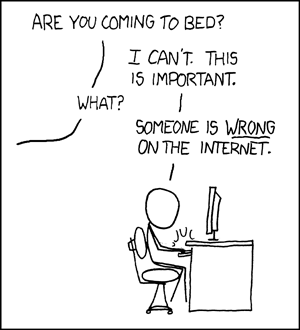
And perhaps that's what makes these situations so difficult. It's remarkably easy to become part of the problem you're trying to point out.
Meanwhile, the electricity cables still need replacing, the water infrastructure still needs repairing, and the municipal teams still have more work than they can manage.
From a systems perspective, many of these problems are not going to be solved by one person demanding answers more forcefully. They require people across departments, contractors, councillors, officials and communities to work together, often with very limited resources.
Complex problems require considerable cooperation and coordination. And I can't see how we achieve either without respectful communication.
**
AI disclosure: I used ChatGPT as a thinking and writing partner to help analyse the WhatsApp exchanges, organise my thoughts and refine this post. The experiences, interpretations and opinions are my own, and I take responsibility for the final content. Charlie, the LLM has a joke for you:
Knock, knock.
Who's there?
Accountability.
Accountability who?
Noted.


No comments:
Post a Comment